$1 to Save Billions of Lives? The Fantasy Math Behind Effective Altruism
Accurate as of: Jul 22, 2026
Effective Altruism (EA) is a movement that claims to have the most effective donation opportunities in the world. While it would be great if this were true, EA's claim is based on fantasy math.
Big Claims Based on Fantasy Math
Fantasy math is the practice of making unsubstantiated assumptions, and using them to calculate metrics. The main problem with fantasy math is that it allows any impact metric to be calculated—even ones that exceed the current population of Earth.
For example, in the excerpt below Will MacAskill (co-founder of the Effective Altruism movement) uses fantasy math to calculate an impact metric that is over 100x larger than the current population of Earth:
"We think that even a highly conservative assessment would assign at least a 0.1% chance to an AI-driven catastrophe (as bad as or worse than human extinction) over the coming century. We also estimate that $1 billion of carefully targeted spending would suffice to avoid catastrophic outcomes in (at the very least) 1% of the scenarios where they would otherwise occur. On these estimates, $1 billion of spending would provide at least a 0.001% absolute reduction in existential risk. That would mean that every $100 spent had, on average, an impact as valuable as saving one trillion (resp., one million, 100) lives."
In short, under MacAskill's main calculation, the average impact of using $100 efficiently is as valuable as saving a trillion lives.
But what exactly does EA do to achieve such massive impact with so little money?
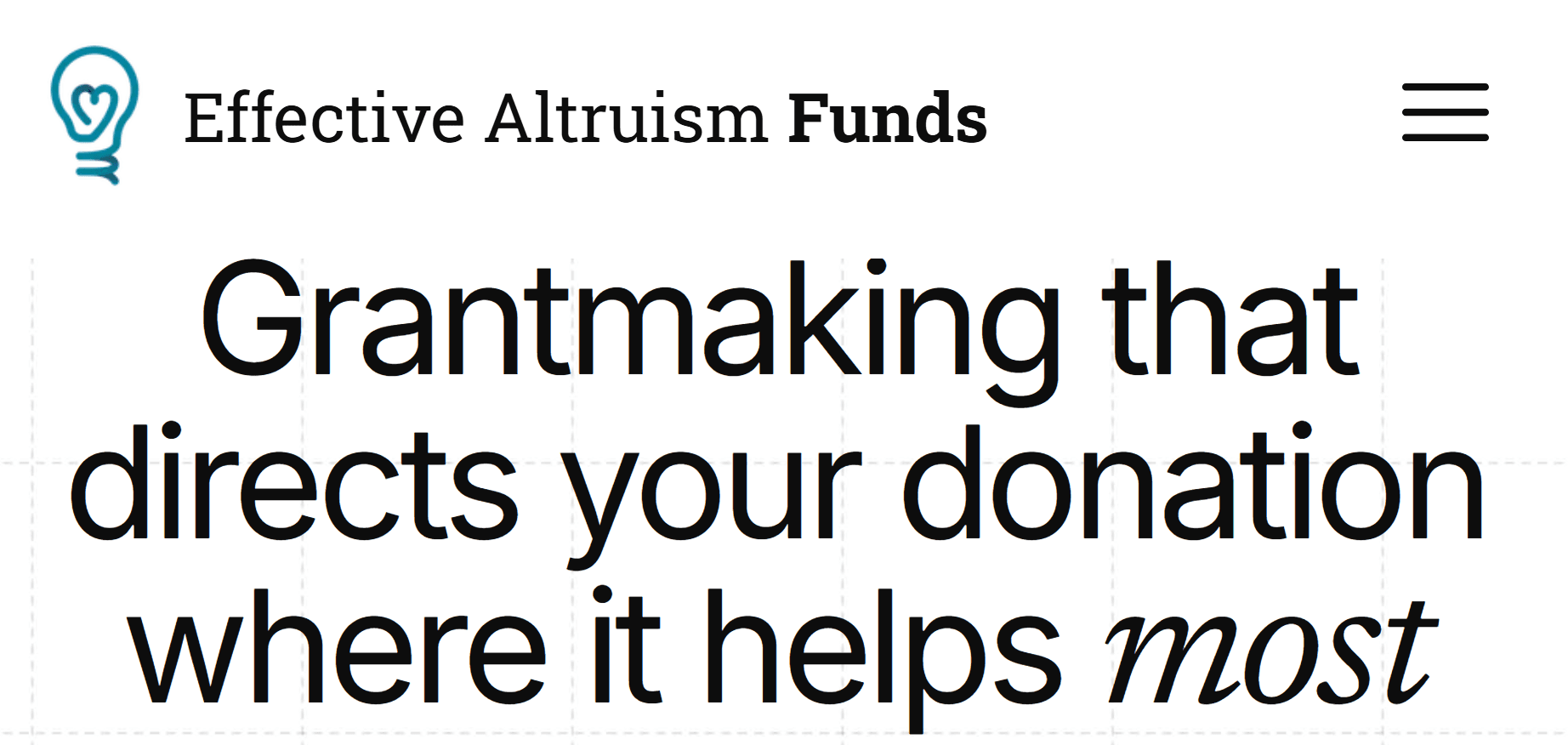
Well, below is an example of a grant given out by Effective Altruism Funds, a flagship EA institution that claims to direct donations "where it helps most":
Grant: $36,982 for a student studying AI strategy.
Justification: "The purpose of this grant is to increase my productivity and happiness. Given my expected financial situation, I currently have to make compromises on e.g. Ubers, Soylent, eating out with colleagues, accommodation, quality and waiting times for health care, spending time comparing prices, travel durations and stress, and eating less healthily."
There is no evidence that this grant achieved anything of importance. However, by doing some "highly conservative" EA math, we can quickly conclude that distributing this grant saved trillions of lives in expectation.
Why This Matters
EA starts with a simple idea: try to donate effectively. Leaders in the EA community then take this idea, and use fantasy math to create massive impact metrics.
This results in two serious problems.
Problem 1: Donors Are Misled
After impact metrics are created with fantasy math, EA organizations often advertise these metrics as verified facts.
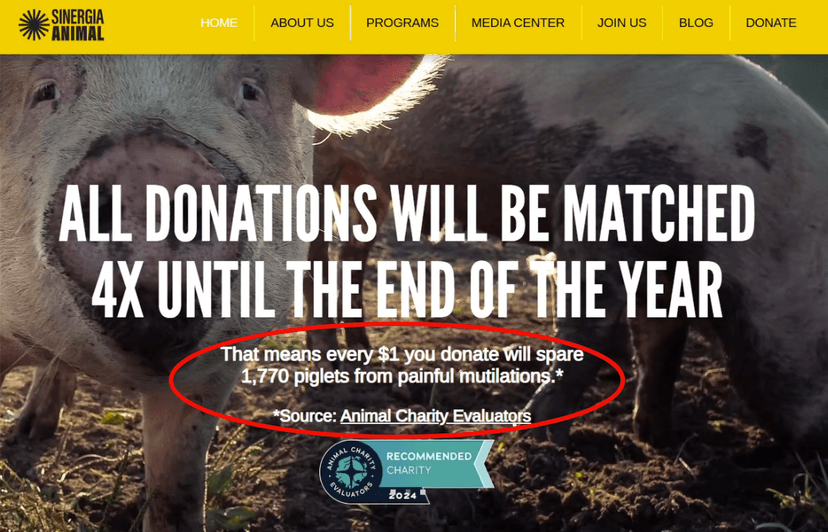
This misleads donors, who believe they're having massive impact with each dollar they donate.
Problem 2: Extreme Behavior
EA's largest impact calculations suggest that using $1 efficiently is more valuable than saving a billion lives.
When someone believes this, extreme behavior starts to look rational.
Would most people steal $1 if it would save a billion lives? Probably, since that's more than the current population of Europe.
Fantasy Math in the Animal Protection Movement
It should be noted that some of EA's worst fantasy math takes place in the animal protection movement. Many of EA's animal charities likely help virtually zero animals, yet EA research groups use fantasy math to credit them for massive impact.
For example, how many chickens are helped by the strategy being executed below?
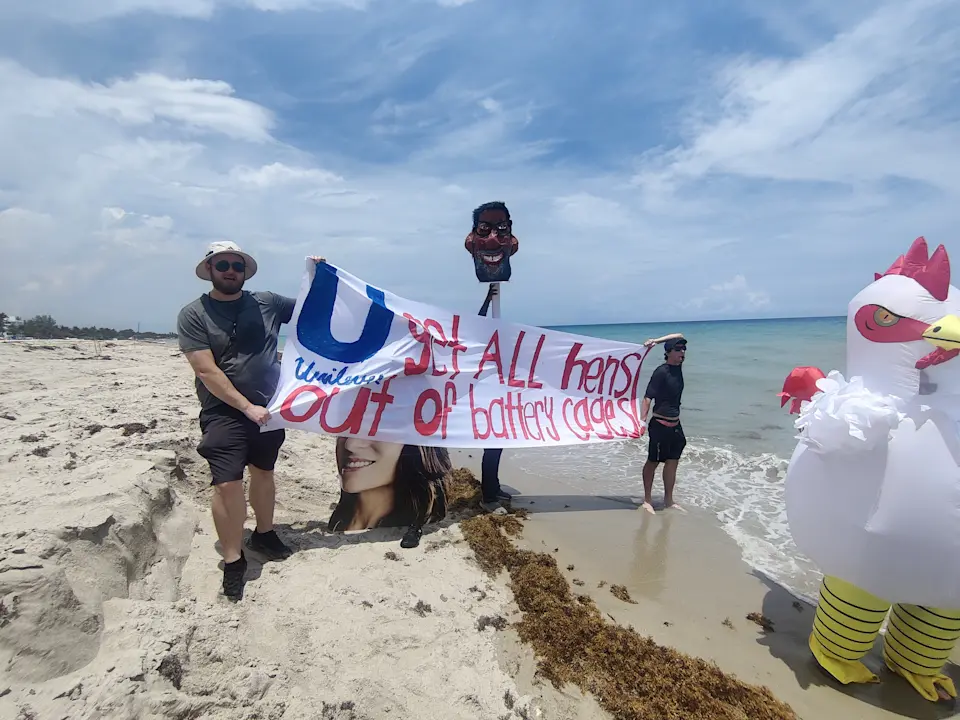
Probably zero, but a leading EA research group has calculated that this strategy affects "9 to 120 years of chicken life per dollar spent."
Closing Thoughts
The core problem here isn't that a couple of EA metrics are bad. The core problem is that throughout EA, many organizations rely on fantasy math to make unjustified claims about their impact.
To receive updates when we publish new articles, subscribe to our newsletter below for free.
Related Articles
Complexity Hides the Flaws of Effective Altruism's Models
Effective Altruism is known for its complex models. But beneath this complexity, the models aren't as great as they seem.
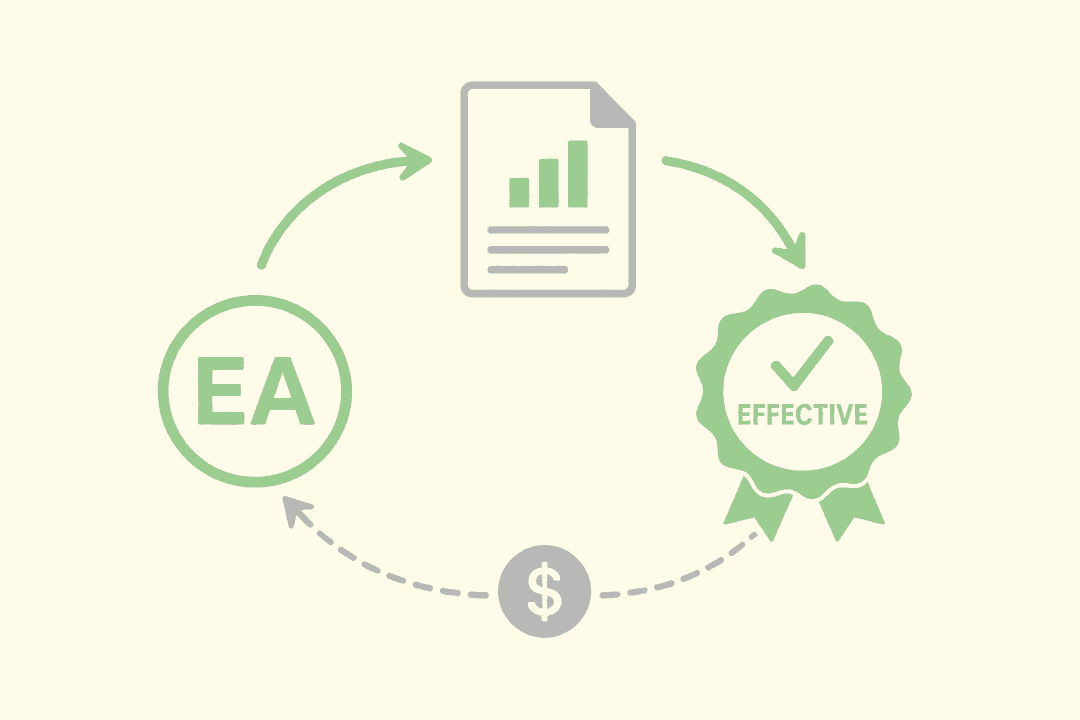
Effective Altruism Labels Itself Effective
EA pays EA orgs to analyze EA, then cites that analysis to call EA effective. This creates the appearance of independent analysis, when it's actually just EA promoting itself.
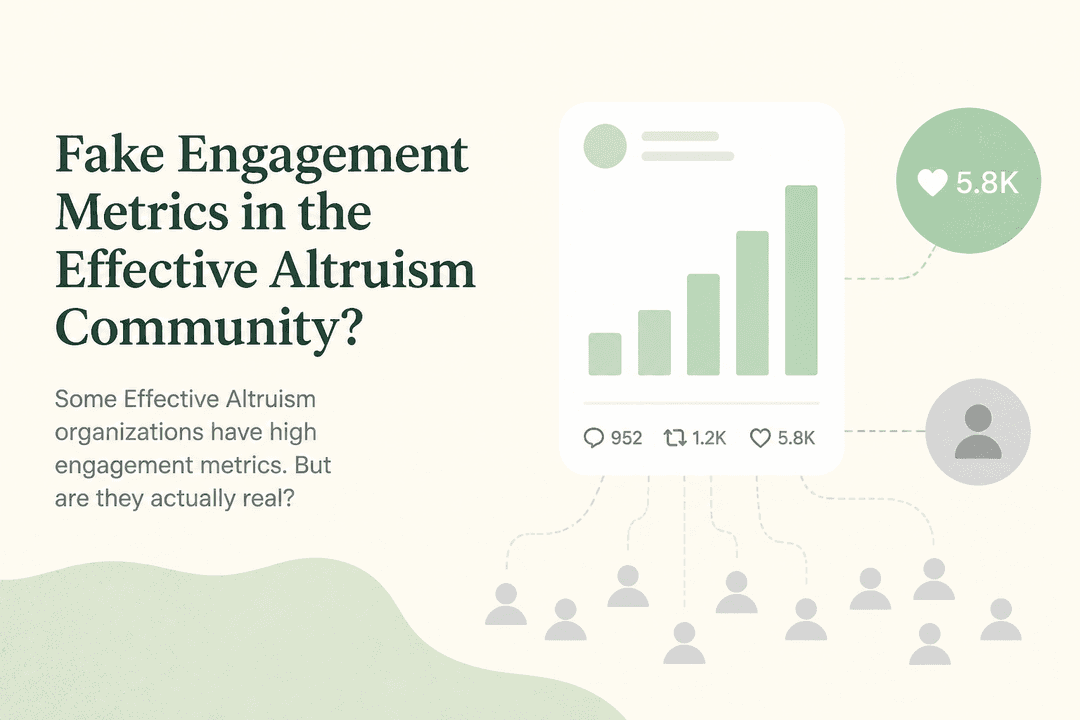
Fake Engagement Metrics in the Effective Altruism Community?
Some Effective Altruism organizations have high engagement metrics. But are they actually real?
References
Note: The advertisement's 1,770 figure came from Sinergia's 354-piglets-per-dollar metric, which was multiplied by 5 to account for the advertised 4x donation match ($1 donated + $4 matched = $5 counted).