Effective Altruism Labels Itself Effective
Accurate as of: Jul 16, 2026
Imagine this: a cheese company pays a dairy association to conduct research on whether cheese is healthy. Unsurprisingly, the research concludes that cheese is not only healthy—it's 100x more healthy than any other food. Cheese lovers then cite this metric as objective evidence that cheese is great.
That might sound absurd, but it's essentially what the top Effective Altruism (EA) institutions do.
To demonstrate EA's "effectiveness," these institutions follow three simple steps:
Step 1: EA grantmakers fund EA research groups.
Step 2: Those EA research groups calculate metrics for EA charities and interventions.
Step 3: EA uses those metrics as proof that EA has found the most effective ways to do good.
This creates the appearance of objective analysis, when in reality it's just EA analyzing itself.
Case Study: Massive Metrics for "Corporate Campaigns"
Two of EA's largest research groups are:
- Animal Charity Evaluators (ACE); and
- Rethink Priorities.
Coefficient Giving is a major funder of both of these research groups, and has also put a lot of money into an intervention called "corporate campaigns."
Unsurprisingly, both ACE and Rethink Priorities have published research claiming that corporate campaigns are incredibly effective:
- ACE says $1 in corporate campaigns can help hundreds of animals.
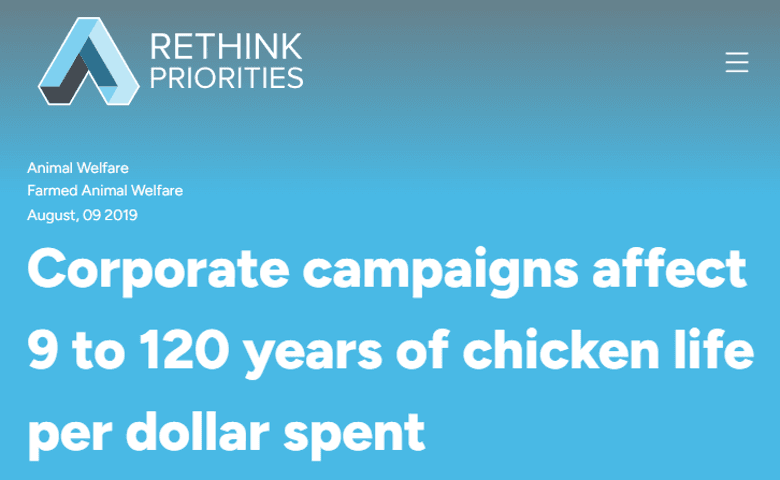
- Rethink Priorities says $1 in corporate campaigns affects 9 to 120 years of chicken life.
In alignment with these findings, Coefficient Giving has claimed that the money they gave to corporate campaigns helped billions of animals.
Conveniently, everyone involved benefits from claiming corporate campaigns are great:
- The Researchers: ACE and Rethink Priorities look like they're uncovering groundbreaking interventions, and get more funding.
- The Funder: Coefficient Giving looks like evidence-based visionaries who are having a massive impact.
But here's the kicker: what actually are corporate campaigns? Well, the picture below shows a top EA charity conducting a corporate campaign:

Would a neutral observer calculate that this work is massively impactful? No, and that's why EA benefits from citing itself.
Conclusion
On the surface, EA looks like a thriving ecosystem filled with objective analysis. But in reality, much of it is a self-promotion loop in which EA funds EA orgs to analyze EA.
Unsurprisingly, this results in analysis that says EA is effective.
Endnote
There is nothing inherently wrong with promoting yourself or citing your own work. If a company says "our research found that our product is the best on the market," nothing deceptive has happened, since the readers can clearly see that the company is promoting itself.
The problem here is that it's often unclear to readers when EA is promoting itself. Instead, many of EA's promotional claims are marketed as unbiased assessments.
To receive updates when we publish new articles, subscribe to our newsletter below for free.
Related Articles
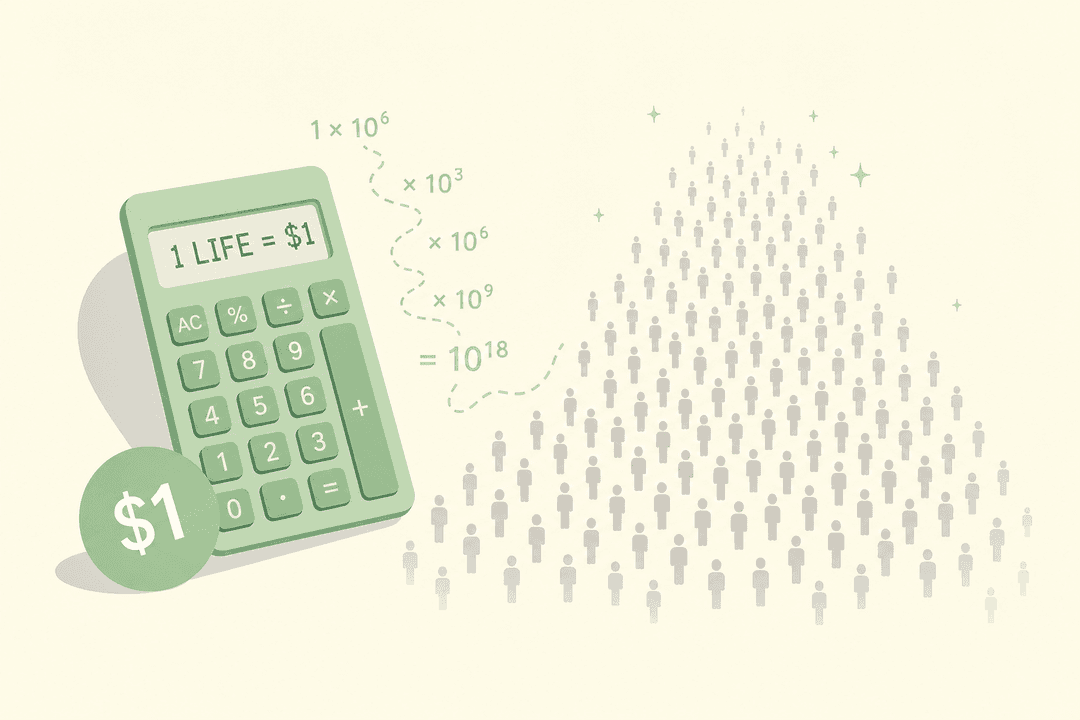
$1 to Save Billions of Lives? The Fantasy Math Behind Effective Altruism
Any metric can be calculated by using fantasy math, and that's what EA is built on.
Complexity Hides the Flaws of Effective Altruism's Models
Effective Altruism is known for its complex models. But beneath this complexity, the models aren't as great as they seem.
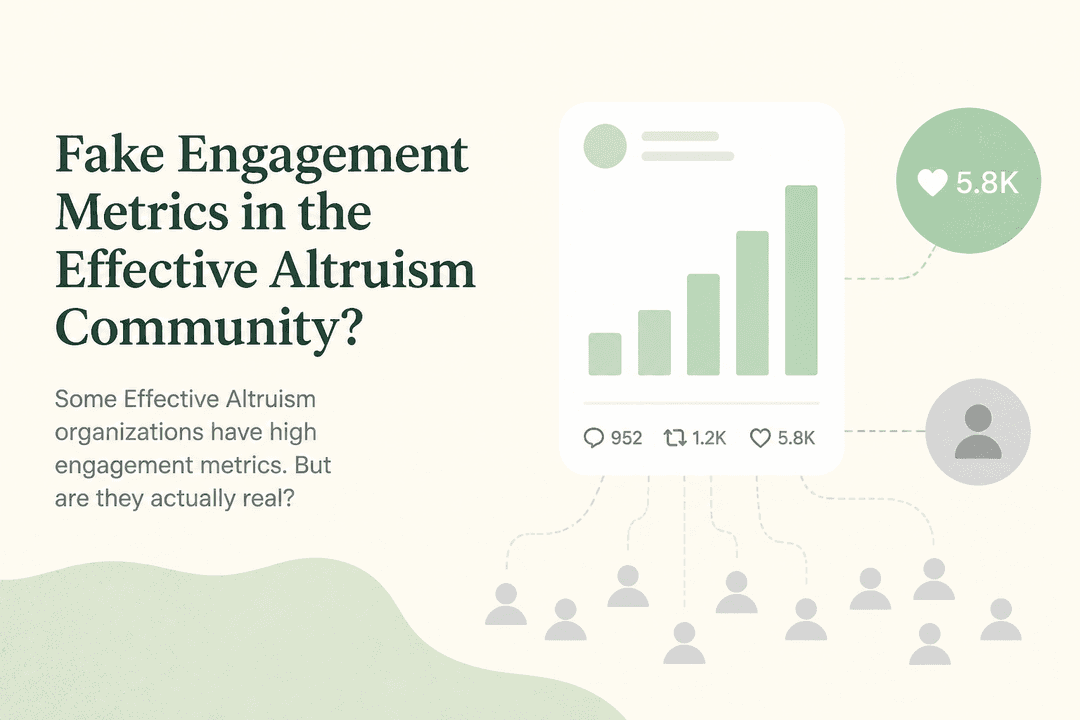
Fake Engagement Metrics in the Effective Altruism Community?
Some Effective Altruism organizations have high engagement metrics. But are they actually real?
References
Note: see Row 26
Note: in this article, Coefficient Giving states 'Our work so far has improved the lives of over 3 billion farm animals.' This citation for this claim says that 'This comes from an internal estimate summing impact from 2015 to 2025 of corporate campaigns.' A key reason that Coefficient Giving's metric is trusted is because organizations like ACE and Rethink Priorities have branded corporate campaigns as an absurdly effective intervention that helps massive numbers of animals with each dollar.