Impact Metrics for Indirect Work Are Misleading
Many "cost-effective" charities avoid direct work like running shelters or feeding homeless people. Instead, they focus on indirect actions—like creating brochures or emailing companies.
Why is this? Because indirect actions cost little, and allow charities to make any impact claim they want:
- Direct Work has bounded impact. If a charity shelters 50 chickens, the charity's impact is bounded at 50 chickens.
- Indirect Work has unbounded impact. If a charity makes a brochure on why chicken farming is bad, the charity's impact "could" be millions of chickens.
And to make matters worse, it is generally impossible to disprove the claimed impact of indirect work. No one can prove a brochure didn't help millions of chickens, even if the true impact was zero.
It's the perfect setup for high cost-effectiveness calculations: Low cost. Massive impact claims. Impossible to disprove.
The charity below claims to help millions of animals by giving out awards to meat companies. But how do we know the true impact wasn't zero?
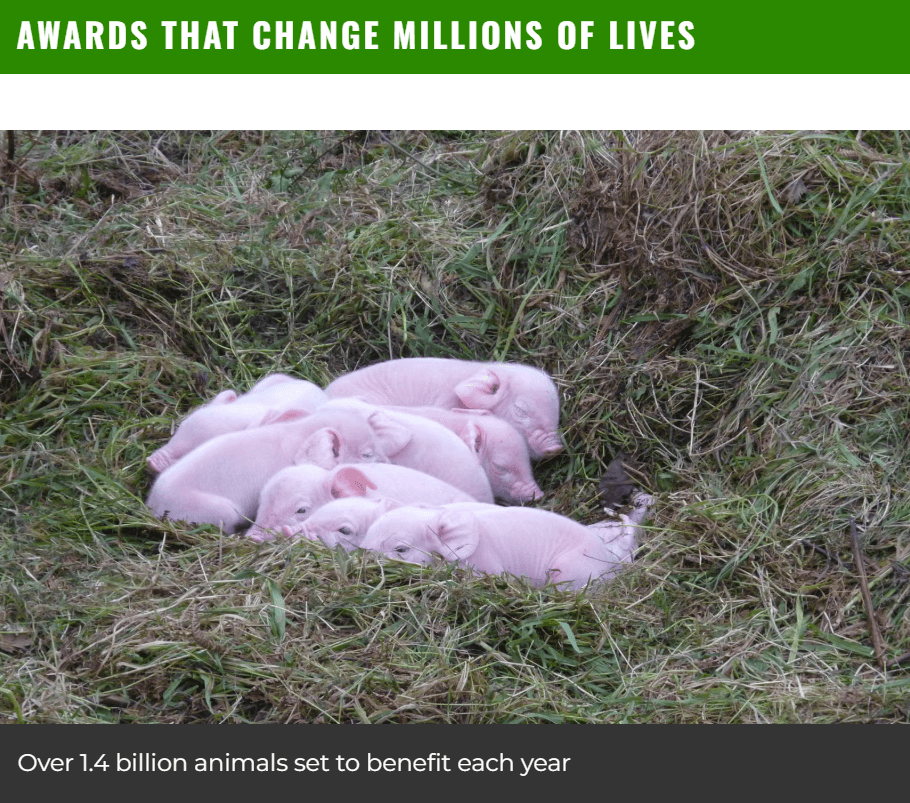
Indirect Work Isn't the Problem — Misleading Metrics Are
To be clear, there's nothing inherently wrong with indirect work. The problem arises when charities make massive impact claims about actions that are inherently uncertain.
For example, it's fine to say:
"We gave out awards to meat companies. This is part of our goal to incentivize better farming practices."
But it is misleading to say:
"We helped millions of animals by giving out awards."
Why? Because no one actually knows how many animals (if any) were helped by the awards.
To receive updates when we publish new articles, subscribe to our newsletter below for free.
Related Articles
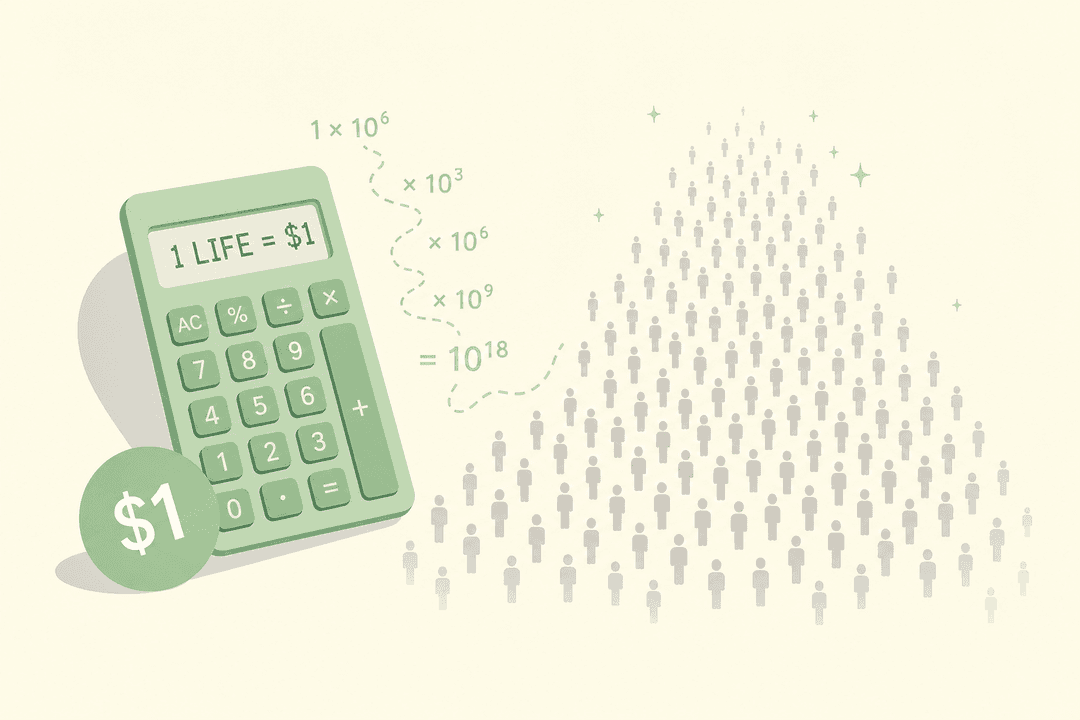
$1 to Save Billions of Lives? The Fantasy Math Behind Effective Altruism
Any metric can be calculated by using fantasy math, and that's what EA is built on.
Why ACE's Metrics Are Not Grounded in Reality
ACE advertises metrics that tell donors they can have a massive impact. Unfortunately, these metrics are not grounded in reality.
Charities Are Incentivized to Lie About Impact Metrics
As a whole, charities that publish impact metrics are structurally incentivized to exaggerate. This means that in many cases the metrics are marketing material rather than objective analysis.