When "Trust the Experts" Fails
There's a common piece of advice we've all heard: "Trust the experts." And in some cases, it's exactly right.
If a chemistry PhD tells you that drinking a certain chemical will kill you, you should probably believe them. Chemistry is a field grounded in objective truths, repeatable experiments, and decades of validated research. In this context, expertise genuinely means something. It reflects a deep understanding of reality — not just a personal opinion.
But not all fields work that way.
When Experts Are Just People With Informed Opinions
In many fields, experts don't have objective truths, and are just people with informed opinions.
Take political science. If a political science PhD tells you that Joe Biden was a better president than Barack Obama, should you simply accept that as true?
Of course not. You can easily find a dozen other political science PhDs who will argue the opposite.
That's because this isn't a matter of objective fact — it's an interpretation, filtered through values, biases, and subjective judgment.
This doesn't mean that expert input in subjective fields is useless. But it does mean that in these contexts, you shouldn't automatically accept what an expert claims as true. Instead, you should assess the information yourself, and reach your own conclusion.
But there's an even bigger problem: in some cases, the people being promoted as "experts" aren't even experts at all.
Fake Experts
The most dangerous "experts" are the ones who were never experts to begin with. Legally, anyone can be called an expert — and in fields like animal advocacy, there's no clear standard for what expertise even means.
To exploit this, organizations often invoke "experts" to give their claims credibility and to dismiss critics as "lacking expertise."
Oftentimes, these "experts" are just people who agree with them and have been doing the same work for a long time. But doing something for a long time doesn't guarantee competence or insight.
Consider a group of people who create a charity that attempts to help animals by putting on costumes and standing on the side of the road. They claim that their work helps millions of animals, and that you can trust them due to their years of experience and expertise in helping animals.
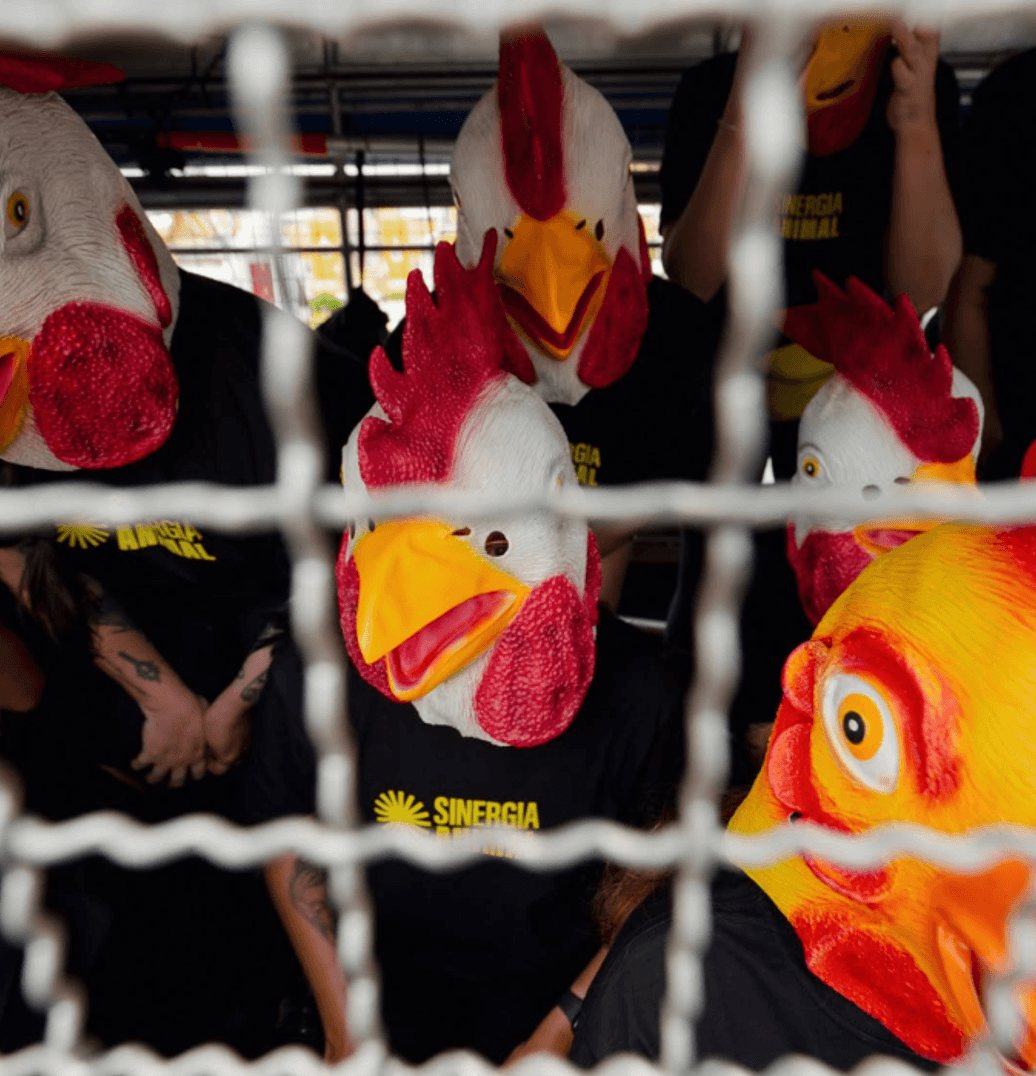
Are these people experts in helping animals? Or are they just people who raise money while accomplishing nothing?
This is how "experts" work in many fields. An organization wants to market an idea (that in many cases will give them more money and power) and invoking "experts" helps with marketing.
Conclusion
In domains built on interpretation or ideology, "trust the experts" becomes a tactic to push agendas rather than promote truth.
This tactic is especially common in the nonprofit sector, where individuals, charities, and charity evaluators try to promote the interventions that align with their own ideological beliefs.
Endnote
A common tactic from fake experts is creating long, complex documents that no one will actually read. This creates the appearance of rigor and science, and can be cited to substantiate bogus claims.
When we write articles, we try to keep them short and readable so that you can evaluate our reasoning yourself.
To receive updates when we publish new articles, subscribe to our newsletter below for free.
Related Articles
Complexity Hides the Flaws of Effective Altruism's Models
Effective Altruism is known for its complex models. But beneath this complexity, the models aren't as great as they seem.
Charity Evaluators Are Incentivized to Lie About Impact Metrics
As a whole, charity evaluators that publish impact metrics are structurally incentivized to exaggerate. This means that in many cases the metrics are marketing material rather than objective analysis.
Why Donors Get Fooled: 5 Principles Every Donor Should Understand
Many donors want to help others, but struggle to have an impact. If you want your donations to actually make a difference, here are 5 key principles every donor should understand.