The Pseudoscience Behind "Effective Altruism"
Take a quick look at an Effective Altruism (EA) website and you'll find no shortage of charts, graphs, cost-effectiveness estimates, and methodological jargon that looks like it was pulled from an academic journal.
At first glance, it appears impressively rigorous—like an objective, analytical approach to finding the most effective charities.
But if you take a closer look, you'll eventually realize: it's built on pseudoscience.
Case Study: Animal Charity Evaluators
Animal Charity Evaluators (ACE) is one of the EA movement's flagship research groups.
In 2023, ACE created a model for calculating cost-effectiveness that is shown in the image below.
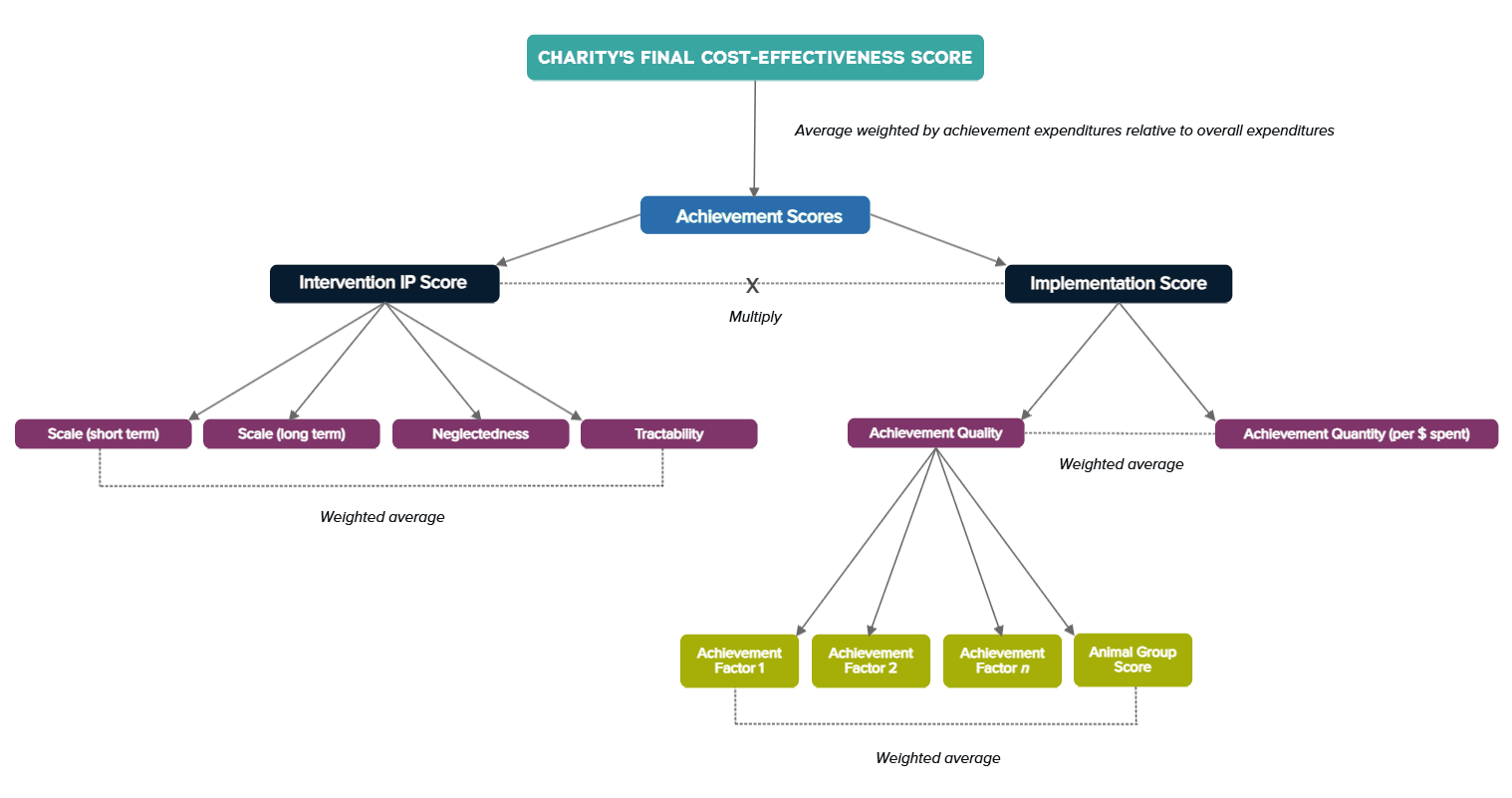
On the surface, the model appears impressive. It has numerous technical variables, and lots of math is being done.
However, underneath this complexity is an inconvenient truth: ACE's model allows charities to achieve a better cost-effectiveness rating by being less efficient.
In one case, this flaw caused a legal charity to receive a significantly better cost-effectiveness rating for spending over 100x more money to secure the exact same legal outcome. This boost was so significant that ACE determined the legal charity was one of the best animal charities in the world even though they had not achieved any favorable legal outcomes.
But here's the kicker: ACE knows this. They were directly informed of how their system rewards inefficiency, and in 2024, they agreed it's an issue.
Yet in 2025, ACE still relied on the same broken model to determine over half of their "Top 11 Animal Charities to Donate to" and marketed these charities as 100x more impactful than average charities.
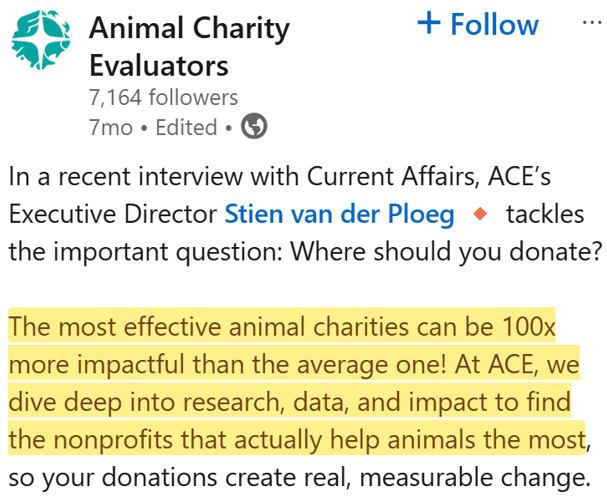
This worked great for ACE's marketing, but not for the donors who trusted it.
The Broader Problem
It would take the average person months to understand many of EA's models. Most people won't do this, and will instead just donate because they're impressed by how technical and professional things look.
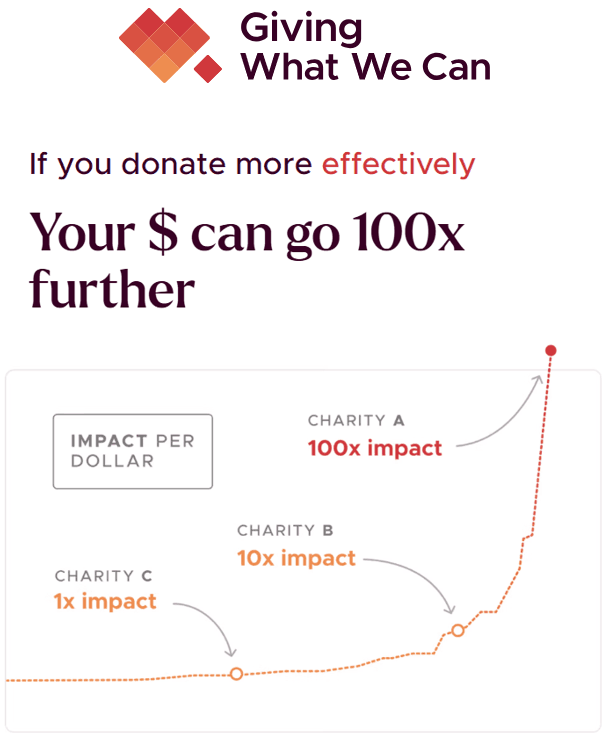
That's the danger of EA's pseudoscience. Donors are overwhelmed with scientific-looking information, so they donate without digging deeper.
To receive updates when we publish new articles, subscribe to our newsletter below for free.
References
Note: In the archive above, ACE is using the broken model to determine Faunalytics, Legal Impact for Chickens, New Roots Institute, Shrimp Welfare Project, The Humane League, and Wild Animal Initiative are top charities. This is 6 of ACE's top 11 charities, which is more than half.